
You’ve decided to build a new energy-efficient home in British Columbia, and you’ve heard the term “Step Code 5” thrown around. You know it matters for energy performance, but you’re not entirely sure what it means, how it differs from a passive house or net-zero home, or whether it’s the right choice for your project. The confusion is understandable—these terms overlap, they’re regulated differently across BC municipalities, and the requirements have shifted over recent years.
Understanding BC’s Step Code and How It Compares to Passive House and Net-Zero
British Columbia’s Step Code is a provincial energy standard that sets minimum performance requirements for new residential buildings. It exists in five steps, with Step 1 being the baseline (similar to the BC Building Code) and Step 5 being the most stringent. Step Code 5 represents a significant leap in energy efficiency—homes built to this standard use dramatically less energy for heating, cooling, and domestic hot water than a conventional home.
The key difference between Step Code 5, passive house, and net-zero lies in their scope and approach.
Step Code 5: A Performance Threshold
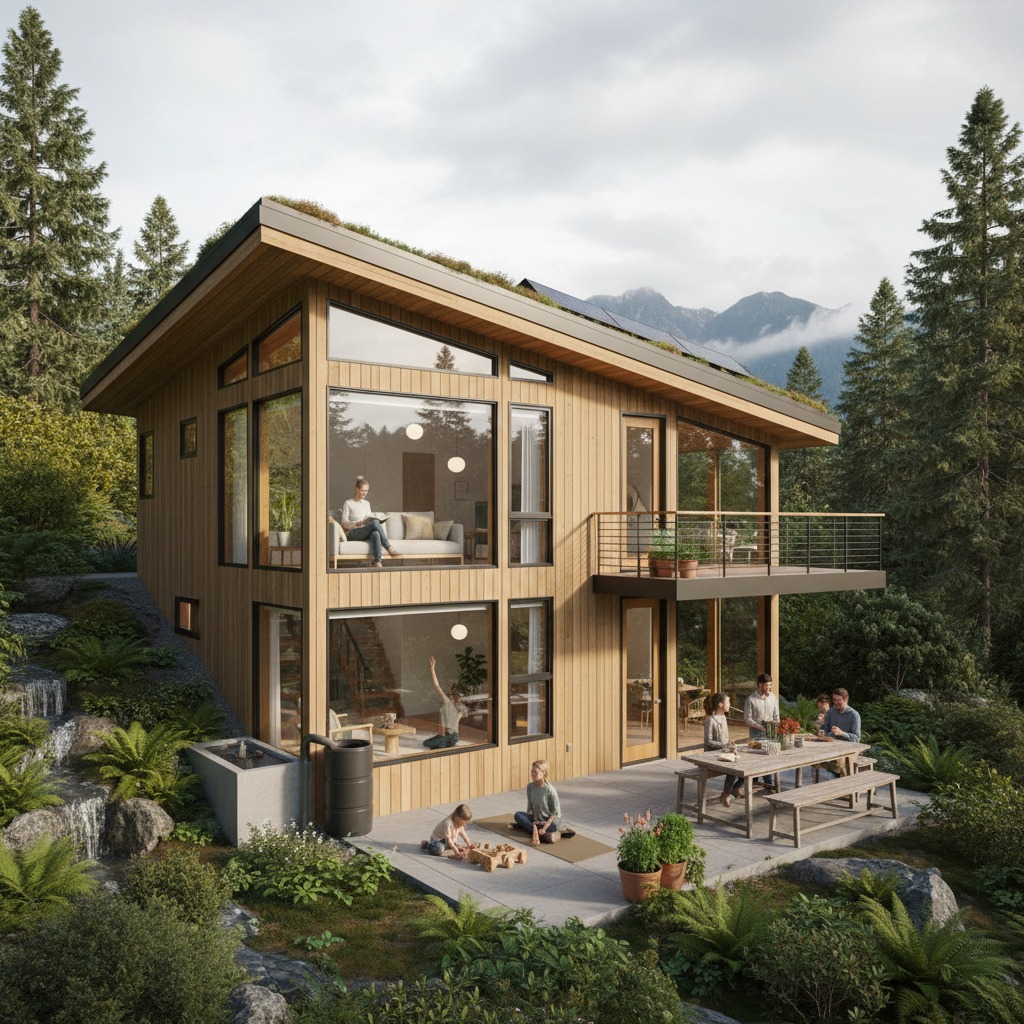
Step Code 5 sets measurable energy performance targets. Your home must achieve a specific energy intensity level, measured in kilowatt-hours per square metre per year. It focuses on the energy needed to operate the building—heating, cooling, ventilation, and hot water. To meet Step Code 5, builders typically prioritize excellent insulation, high-performance windows, airtight construction, and efficient mechanical systems. Our team designs homes that exceed these targets, ensuring your home performs reliably year after year.
Passive House: A Rigorous Design Philosophy
Passive House is an international standard that goes beyond energy targets. It’s a design and construction methodology focused on achieving extreme energy efficiency through passive means—meaning you rely on the building envelope itself to maintain comfort, rather than active heating and cooling systems. Passive house homes typically use 90 percent less energy for heating and cooling than conventional homes. The standard requires third-party certification and involves detailed energy modelling before construction even begins. Not every municipality in BC has experience with passive house projects, but our team has designed and built them successfully across the province.
Net-Zero House: Energy Independence
A net-zero home is one that produces as much energy as it consumes over a year. This usually means combining an extremely efficient building envelope with renewable energy generation—typically solar panels. Some net-zero homes also include battery storage so they can use stored solar energy during winter months or cloudy periods. Net-zero doesn’t necessarily follow passive house principles, though many net-zero projects do incorporate them.
The Practical Overlap
In practice, these standards often work together. A passive house design makes net-zero more achievable because the building uses so little energy that a smaller solar array can generate enough to offset annual consumption. A Step Code 5 home provides a solid foundation, but reaching true passive house certification or net-zero performance usually requires additional design rigour.
Which Standard Should You Choose?
Your choice depends on your priorities, budget, and local requirements.
Step Code 5 is often the practical choice if your municipality requires it, which an increasing number do. It’s measurable, achievable with modern building practices, and our team knows how to design for it. If energy efficiency is your main goal and you want a straightforward path, Step Code 5 delivers significant performance improvements without requiring certification or third-party modeling.
Passive house makes sense if you want maximum comfort and minimal operating costs, and you’re willing to invest in rigorous design and certification. These homes feel noticeably warmer and more stable in winter, even without a large heating system. If you’re planning to stay in your home for decades, the long-term savings and comfort can justify the upfront investment.
Net-zero appeals to homeowners who want energy independence and are comfortable with solar panels and potentially battery systems. It requires a strong building envelope (often passive house level) plus renewable generation. The combination of an efficient home plus solar makes sense economically in most of BC, particularly in regions with good sun exposure.
Municipal Requirements Across BC
Different BC municipalities are adopting Step Code requirements at different speeds. Some have already made Step Code 3 or 4 mandatory for new homes; others are moving toward Step Code 5 or requiring it in specific contexts. A few municipalities have no Step Code requirement yet, though this is changing. Before you commit to a design approach, confirm what your municipality currently requires and what’s planned for the future. This will shape your project timeline and design strategy.
Working With Our Team
We design homes to meet or exceed whatever standard makes sense for your project. We’ll assess your municipality’s requirements, discuss your long-term goals, and recommend a path forward. If you choose to add solar panels and battery storage, we integrate that into the design from the start rather than treating it as an afterthought. Our experience across BC means we understand regional differences in climate, building practices, and municipal expectations.
The right choice isn’t always the most advanced standard—it’s the one that aligns with your goals, budget, and circumstances. We’ll help you make that decision clearly.
Have a project in mind? Call us at 604-929-6696 or get a free quote online — no obligation.
Get My Free Quote →Download our complimentary Home Safety checklist to confirm whether your house meets your living standards for your age!